
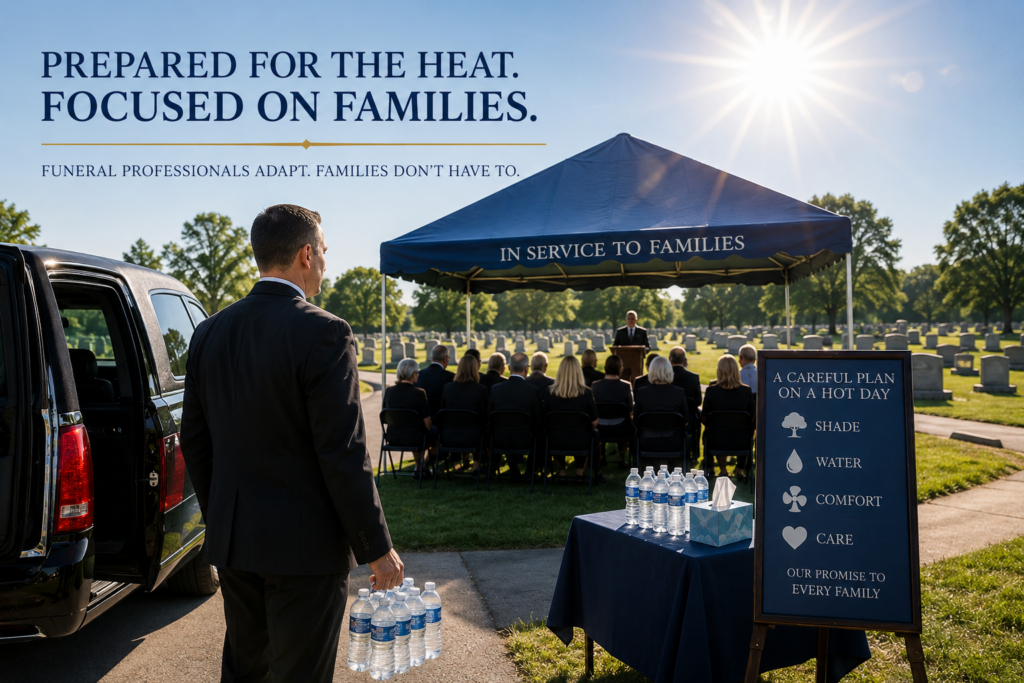
When the Heat Index Tops 105°: How Funeral Homes Adapt to Dangerous Summer Heat
When Extreme Heat Becomes Part of the Job
As much of the Ohio Valley and large portions of the United States experience heat index values exceeding 105 degrees, public officials are urging people to stay indoors, postpone strenuous activities, and remain hydrated. News reports often focus on construction crews, utility workers, landscapers, and first responders who must continue working despite the dangerous conditions.
Far less visible are funeral professionals.
For funeral directors, embalmers, and removal teams, the work of serving families doesn’t stop because temperatures soar. Death occurs regardless of the forecast, and every day funeral homes answer calls from hospitals, nursing facilities, private residences, hospices, and medical examiners’ offices. Families experiencing the loss of a loved one still need guidance, transportation, preparation services, and meaningful ceremonies.
During periods of extreme heat, however, nearly every aspect of funeral home operations requires additional planning.
Most families never notice these adjustments—and that’s exactly how funeral professionals want it. The goal is to eliminate as many distractions as possible so families can focus on remembering the life of someone they love rather than worrying about logistics or the weather.
Behind every seamless funeral service is a team of professionals constantly adapting to changing conditions.
Preparing Before the First Call Arrives
When dangerous heat settles across a region, preparation often begins before the funeral home’s doors even open.
Vehicle inspections become even more important during the summer months. Removal vans, hearses, and service vehicles are checked to ensure air conditioning systems are functioning properly, cooling systems are operating efficiently, and tires, batteries, and fluid levels are ready for another demanding day. A mechanical breakdown while transporting a loved one isn’t simply inconvenient—it can delay services and create additional stress for grieving families.
Vehicle and Equipment Readiness
Many funeral homes also increase the supplies carried in removal vehicles during heat waves. Bottled water, electrolyte drinks, cooling towels, sunscreen, disposable gloves, and first aid supplies become part of the daily checklist. While these items may seem simple, they help protect employees who often move between air-conditioned buildings and outdoor environments throughout the day.
Equipment receives extra attention as well. Stretchers, cots, lifting devices, straps, and transfer equipment are inspected frequently because extreme temperatures can accelerate wear on mechanical components and materials. Reliable equipment not only protects funeral home employees but also ensures every transfer is completed with the dignity families expect.
Preparation is one of the defining characteristics of professional funeral service. By the time a removal vehicle leaves the funeral home, dozens of decisions have already been made that families will never see.
Funeral Removals Become More Physically Demanding
One of the least understood responsibilities in funeral service is the initial removal.
Unlike many professions that take place in climate-controlled environments, funeral directors and removal personnel may respond to homes without air conditioning, apartment buildings without elevators, rural properties, accident scenes, or long-term care facilities where conditions vary significantly.
Working Safely During Difficult Removals
High temperatures increase fatigue, raise the risk of dehydration, and make lifting and maneuvering equipment more physically demanding. Yet every removal must still be completed with patience, professionalism, and respect.
Many funeral homes adjust staffing during periods of extreme heat by assigning additional personnel to difficult removals whenever possible. Sharing physically demanding tasks reduces fatigue while improving safety for employees and ensuring the deceased is handled with the utmost dignity.
Communication also becomes more important. Team members watch for signs of heat exhaustion, remind one another to stay hydrated, and rotate responsibilities during extended calls or outdoor work.
These precautions aren’t just about protecting workers—they’re about maintaining the high standard of care every family deserves.
Planning Outdoor Funeral Services Around the Weather
Extreme heat affects more than funeral home staff. It also changes how funeral directors plan services for families.
Outdoor graveside ceremonies remain an important tradition throughout much of the country, but when temperatures become dangerous, funeral directors often recommend adjustments that preserve the meaning of the service while improving comfort and safety.
Protecting Families and Guests
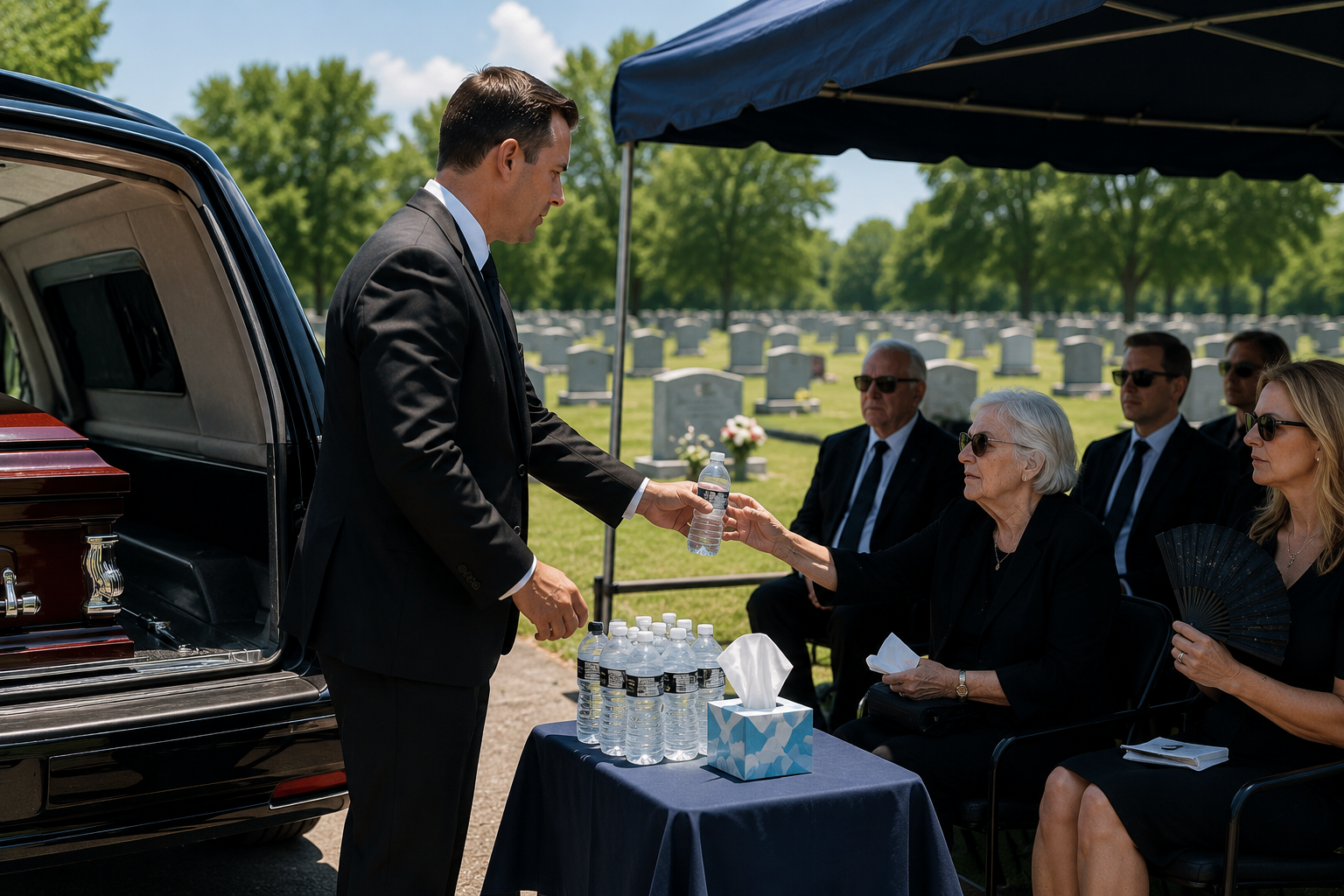
Morning or evening service times may be suggested to avoid the hottest part of the day. Tents provide shade for guests, while bottled water and portable fans help reduce heat stress. Funeral directors also work closely with cemeteries to ensure services begin on time and move efficiently without feeling rushed.
Special attention is often given to elderly family members, young children, clergy, military honor guards, musicians, and pallbearers, all of whom may spend extended periods outdoors.
Managing Flowers, Memorial Displays, and Equipment
Flowers, memorial displays, and audio equipment require additional planning as well. Floral arrangements may be kept indoors until shortly before the ceremony to preserve their appearance, while speakers, microphones, and electronic equipment are protected from direct sunlight whenever possible.
Every adjustment is made with the same purpose: allowing families to focus on honoring a loved one instead of worrying about the weather.
Protecting the People Who Serve Others
Funeral professionals spend their careers caring for families, but they must also care for one another.
During dangerous heat, many funeral homes follow heat-safety practices similar to those recommended for other occupations that involve outdoor work. Employees are encouraged to drink water throughout the day, take cooling breaks between physically demanding tasks, recognize the early warning signs of heat illness, and communicate immediately if they begin feeling unwell.
Professional Appearance and Heat Safety
Professional attire remains an important part of funeral service, but many directors choose lightweight, breathable fabrics or moisture-wicking garments beneath traditional suits during the summer months. Small adjustments like these help reduce heat stress while maintaining the dignified appearance families expect.
The public may never notice these efforts, but they help ensure funeral professionals remain healthy, focused, and ready to serve.
Science, Preparation, and Compassion
Extreme heat also highlights the scientific side of funeral service.
Modern funeral homes rely on climate-controlled preparation rooms, refrigeration systems, ventilation, and carefully maintained environmental conditions to provide appropriate care for the deceased. Temperature management helps preserve the condition of those entrusted to the funeral home’s care while supporting public health and professional standards.
Why Temperature Control Matters
These systems are monitored continuously, especially during prolonged periods of high temperatures. Backup equipment, preventive maintenance, and emergency planning help funeral homes continue serving families even when outside conditions become challenging.
This combination of science and compassion is one of the defining characteristics of funeral service. Technical knowledge supports the work being done behind the scenes, while empathy guides every interaction with the families being served.
Learning to Lead in Every Season
The public often associates funeral service with compassion, but successful funeral directors also rely on planning, problem-solving, communication, and sound judgment. Dangerous heat is just one example of the many real-world situations funeral professionals must be prepared to manage.
At Pierce Mortuary Colleges, students develop those skills through comprehensive funeral service education that combines classroom instruction with hands-on laboratory experience and clinical training. They learn not only the science of embalming and restorative art, but also funeral directing, public health, safety, ethics, and the operational responsibilities required to serve families under a wide variety of circumstances.
Whether responding during a summer heat wave, a winter storm, or another emergency, graduates are prepared to meet the moment with professionalism and compassion.
If you’re interested in a career that combines science, healthcare, business, and meaningful service to others, explore the Associate of Applied Science in Funeral Service program at Pierce Mortuary Colleges, learn more about our Clinical Practicum, or register for an upcoming Virtual Open House at www.pierce.edu.
Because regardless of the weather, families deserve professionals who are prepared to serve.