
Cold-Weather Considerations for Funeral Directors: Training Insights from the Field
After decades in funeral service, I have learned one undeniable truth: winter exposes every weakness in preparation, training, and professionalism. Cold weather does not slow grief, pause schedules, or lower expectations. Families still rely on funeral directors to provide dignity, safety, and compassion—no matter how harsh the conditions.
This article answers the most common questions students and professionals ask about winter funeral service and explains how proper mortuary training prepares you for cold-weather realities.
Why Is Cold Weather a Unique Challenge in Funeral Service?
How does winter impact funeral operations?
Cold weather affects every stage of funeral service. Frozen ground complicates burials, snow and ice slow transportation, and equipment reacts differently in low temperatures. Unlike many professions, funeral service continues regardless of weather conditions.
Why must funeral directors plan differently during winter months?
Winter requires additional planning, backup options, and flexibility. Experienced funeral directors anticipate delays, confirm cemetery readiness, and build contingency plans so families are never caught off guard.
What Are the Biggest Challenges with Winter Burials?
How does frozen ground affect burial services?
Frozen ground can prevent immediate burial, require specialized thawing equipment, or result in temporary interment solutions. Funeral directors must understand cemetery procedures and local regulations to guide families through these situations with clarity and empathy.
What should families know about delayed or spring burials?
In regions with severe winters, delayed burial is common. Funeral directors must explain how remains are respectfully cared for, how memorial services can proceed, and how final interment will occur once conditions improve.
How Does Cold Weather Affect Removal and Transportation?
What risks exist during winter removals?
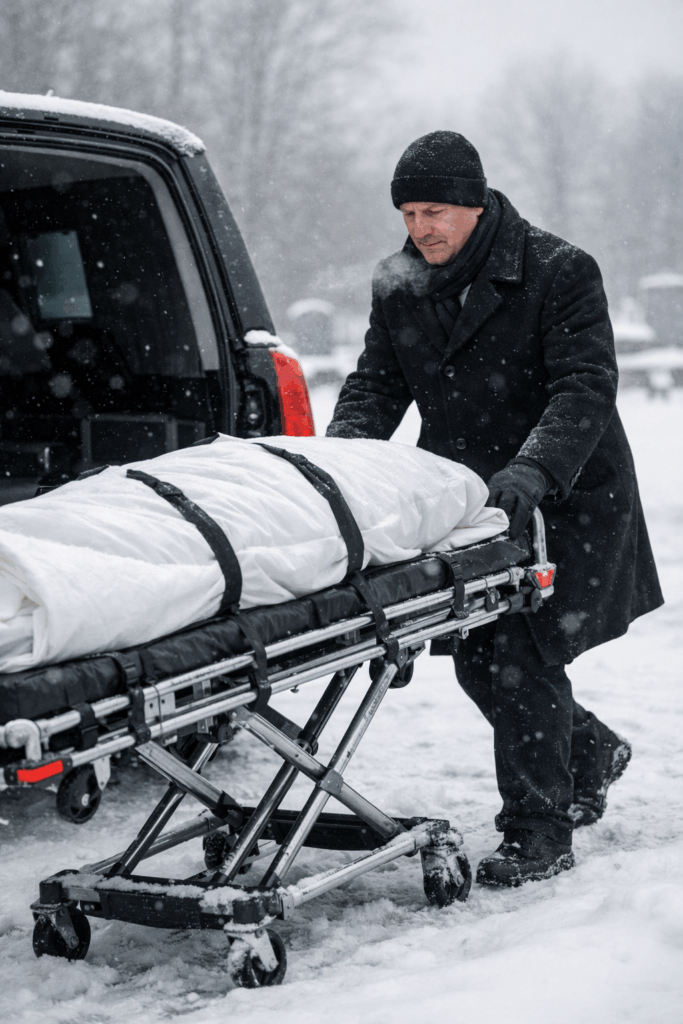
Icy stairs, snow-covered walkways, and reduced visibility increase the risk of injury during removals. Winter scenes demand slower movement, additional staff, and constant situational awareness—skills reinforced through professional training.
How should funeral vehicles be prepared for winter conditions?
Vehicles must be fully winterized with proper tires, emergency supplies, and routine inspections. A funeral director’s responsibility includes protecting their team, the public, and the decedent during every transport.
How Does Cold Weather Impact Funeral Equipment?
Which equipment is most affected by freezing temperatures?
Hydraulic lifts, stretcher mechanisms, and mechanical components may stiffen or fail in cold conditions. Even simple tools require additional checks. Experienced funeral directors inspect equipment before every winter service.
Why is backup equipment essential in winter funeral service?
Cold weather magnifies small problems. Having backup equipment ensures services proceed smoothly without delays or compromises in dignity.
How Are Funeral Directors Trained for Cold-Weather Conditions?
Does mortuary school prepare students for winter challenges?
Strong mortuary programs include real-world training scenarios that address seasonal challenges. Students learn about winter removals, cemetery coordination, transportation logistics, and risk management.
What skills matter most during winter services?
Clear communication, calm decision-making, physical awareness, and adaptability matter most. Winter tests a funeral director’s preparation long before it tests their compassion.
How Should Funeral Directors Communicate with Families During Winter?
What concerns do families have during cold-weather services?
Families worry about delays, safety, and comfort during outdoor services. A professional funeral director addresses these concerns early and provides realistic expectations.
How can funeral directors preserve dignity in harsh weather?
Dignity comes from preparation—shorter graveside services, heated accommodations, clear timelines, and thoughtful adjustments that respect both the family and the conditions.
Why Experience and Education Matter Most in Winter Funeral Service
What separates experienced funeral directors in cold climates?
Experience teaches anticipation. Education builds the foundation. Together, they allow funeral directors to manage winter conditions without compromising professionalism or care.
How does continuing education improve winter readiness?
Ongoing education keeps funeral directors informed about new equipment, safety practices, and evolving standards. Winter is unforgiving—but preparation is empowering.
Final Thoughts from a Veteran Funeral Director
Cold weather does not lessen grief, and it should never reduce the quality of care families receive. Winter funeral service demands preparation, professionalism, and respect for both nature and humanity.
This is why mortuary education matters—not just to earn a degree, but to serve families with confidence and competence in every season.